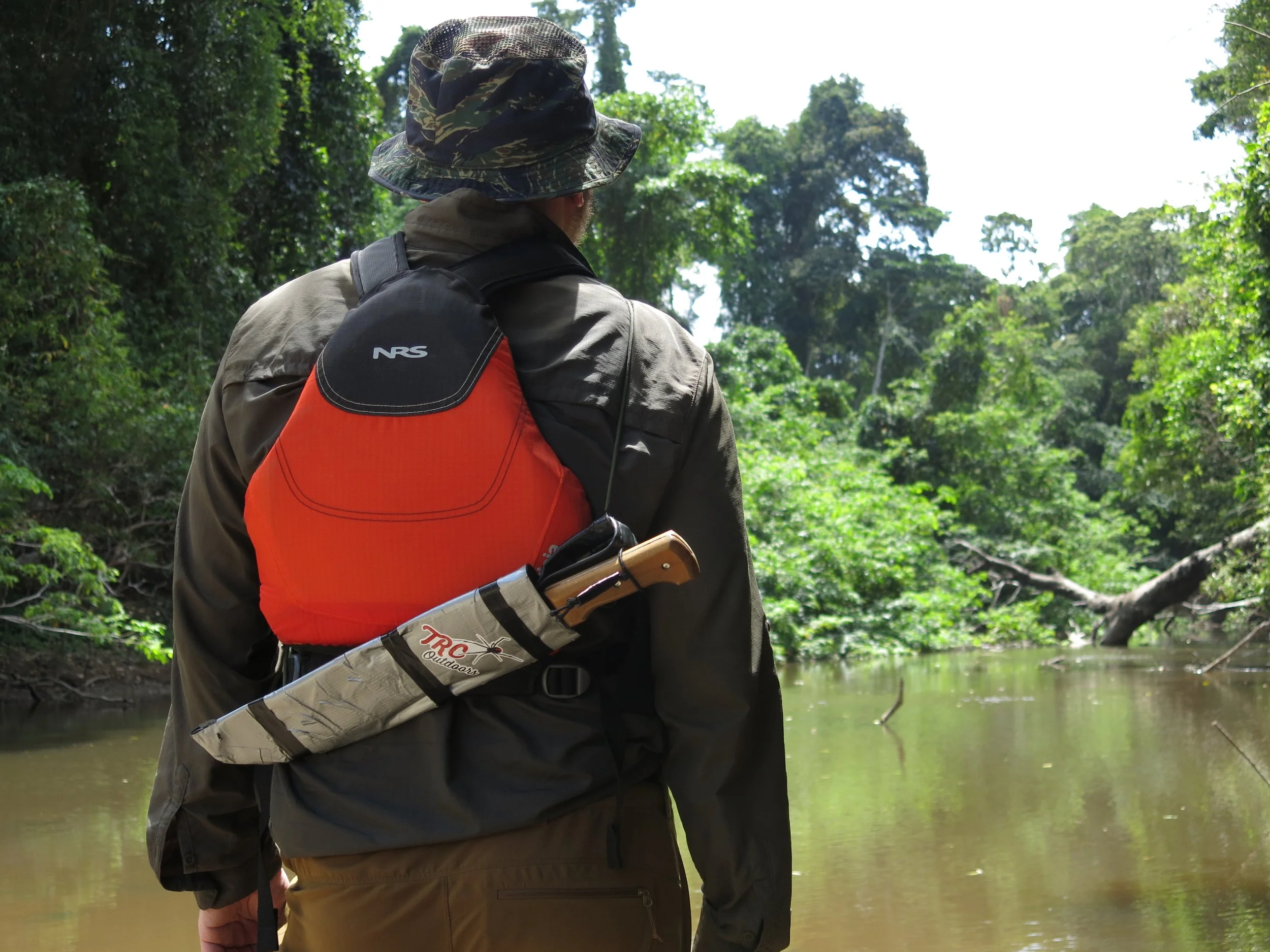
The Burro-Burro River, deep in Guyana.
Field First
I’ve always designed AKM to be field-first.
Everything that I teach needs to survive contact with real conditions, and that’s one of the reasons I steer away from the whole ‘spoon carving under a parachute-tarp’ approach. Don’t get me wrong, those courses are a fantastic way for people to get their first taste of the outdoors. Plenty of bushcraft and survival providers do them exceptionally well.
So why would I try to compete with that?
My background is expedition survival. That sounds dramatic but the reality is far less glamourous.
Most of us are only a damaged tent, a broken camping stove, a dead phone or a soaked sleeping bag away from a bad day outdoors. Survival situations and outdoor emergencies rarely appear out of nowhere, they usually start as inconveniences.
A river in spate on Arran cuts your route off, bad weather hits Ben Macdui earlier than forecast, the mist rolls in up on the Cairngorm plateau. Even turning an ankle on what was supposed to be an easy walk. Individually most of these things aren’t particularly serious but combined they can become something else entirely. I’ve had my own experiences of these on Ben Nevis in summer, in the Cairngorms in winter, in the Amazon rainforest and in the Arctic. These are the situations that interest me because they’re realistic.
My aim has never been to teach people how to survive some big disaster fantasy. What I want to focus on, is to help you recognise problems early. To recognise them before they start getting serious, or before they start to stack up (aka the ‘bad decision dominoes’).
To make better decisions under pressure. This is what prevents small mistakes and accidents becoming genuine emergencies.
That’s what field first means.
